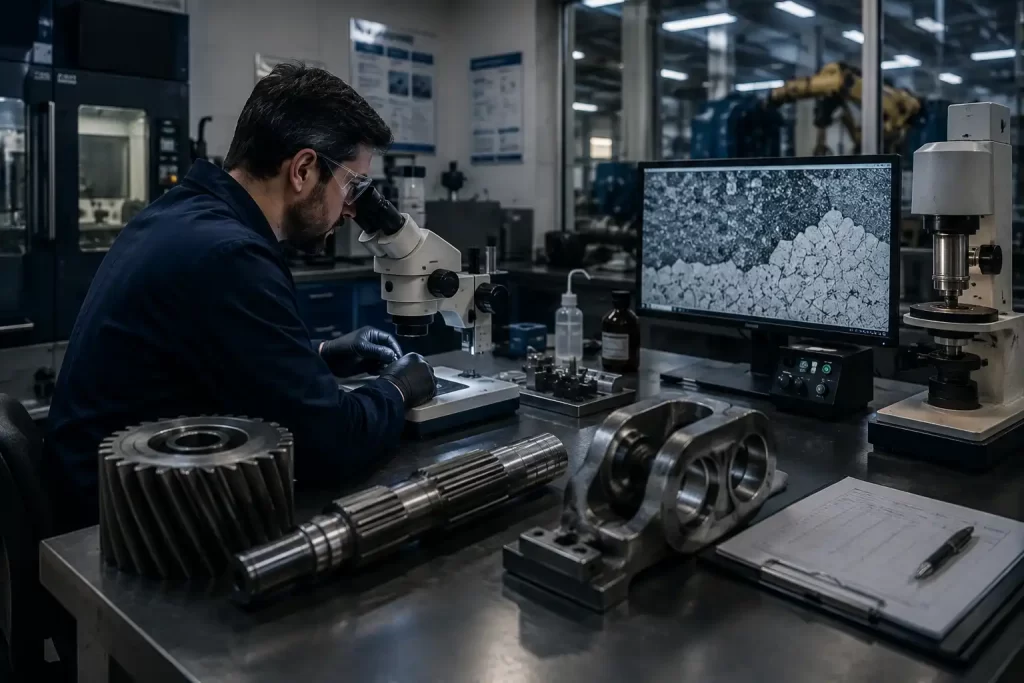
Nital Etch Inspection
Reveal Heat Treatment Conditions & Surface Metallurgical Anomalies
QMN Consultants provides Nital Etch Inspection services to evaluate the metallurgical condition of ferrous components and identify surface abnormalities associated with manufacturing processes, heat treatment, grinding, machining, and in-service exposure.
Using controlled chemical etching techniques, our metallurgical specialists examine steel surfaces to reveal variations in microstructure, heat-affected regions, grinding damage, and other conditions that may not be visible through conventional visual inspection.
What is Nital Etch Inspection?
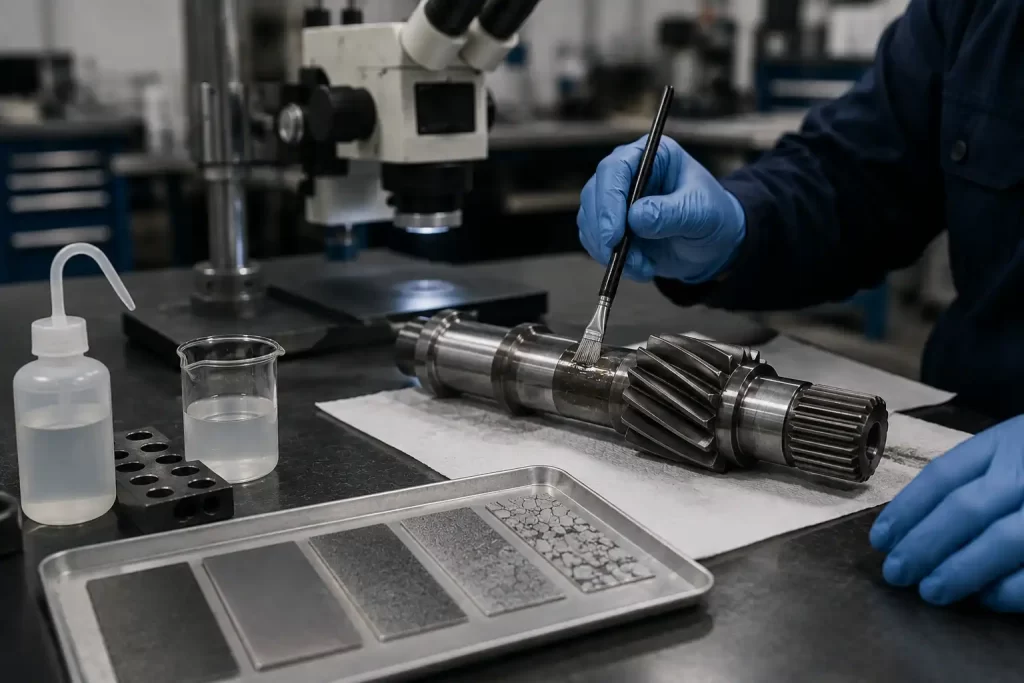
Nital Etch Inspection is a metallurgical surface examination technique where a prepared steel surface is treated with a controlled nitric acid and alcohol solution (Nital reagent). The etching process selectively attacks different microstructural regions, producing contrast that allows trained inspectors to identify metallurgical conditions.
This technique is commonly used for:
- Detecting localized overheating
- Evaluating grinding burn damage
- Revealing altered heat-treatment zones
- Assessing carburized or hardened surfaces
- Identifying abnormal microstructural conditions
Applications of Nital Etch Inspection
Aerospace Components
Nital etching is widely used for inspection of critical aerospace steel components where heat treatment integrity is essential.
Applications include:
- Landing gear components
- Gears and gear shafts
- Bearing components
- Rotating assemblies
- High-strength steel parts
Automotive & Transportation
Inspection of safety-critical components including:

- Transmission gears
- Drive shafts
- Engine components
- Hardened steel parts
Manufacturing & Heat Treatment
Verification of manufacturing processes such as:
- Heat treatment effectiveness
- Grinding operations
- Machining processes
- Surface hardening operations
Defects & Conditions Detectable by Nital Etching
Our Nital Etch Inspection can help identify:
Grinding Burn
Localized thermal damage caused by excessive grinding temperatures, potentially resulting in:
- Tempered regions
- Rehardening zones
- Microstructural changes
- Reduced fatigue performance
Heat Treatment Abnormalities
Detection of:
- Improper tempering
- Inadequate hardening
- Overheating
- Decarburization effects
- Abnormal transformation structures
Manufacturing Process Effects
Evaluation of:
- Heat-affected areas
- Machining-induced damage
- Surface alterations
- Processing inconsistencies
Our Nital Etch Inspection Process
1. Surface Preparation
The inspection area is carefully prepared through controlled polishing or surface finishing to ensure proper metallurgical evaluation.
2. Controlled Etching
A suitable Nital solution is applied under controlled conditions to reveal microstructural contrast.
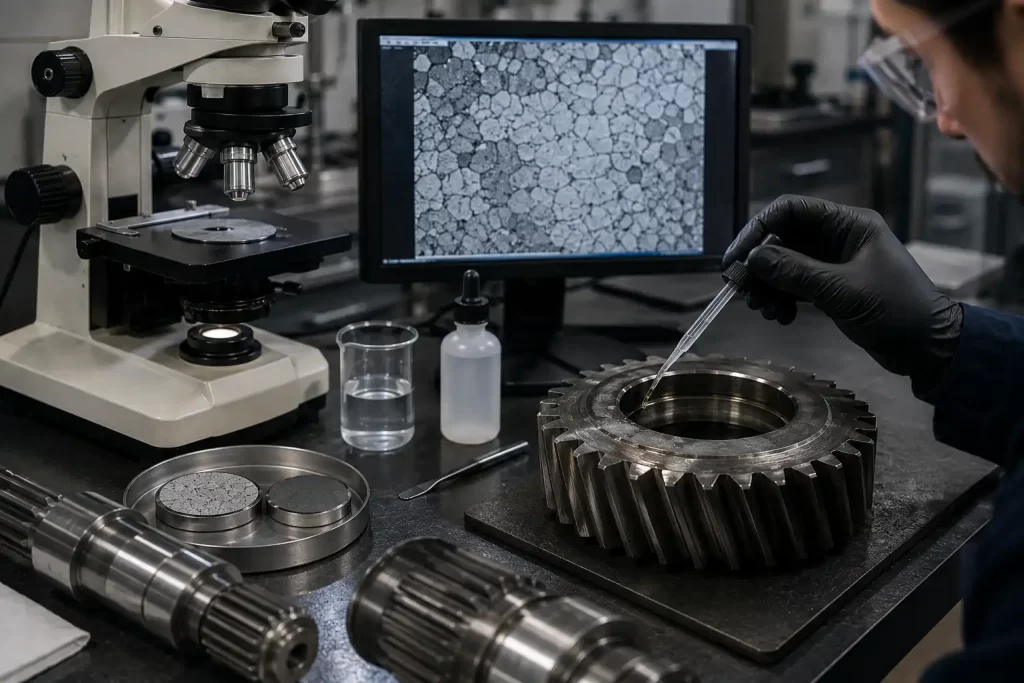
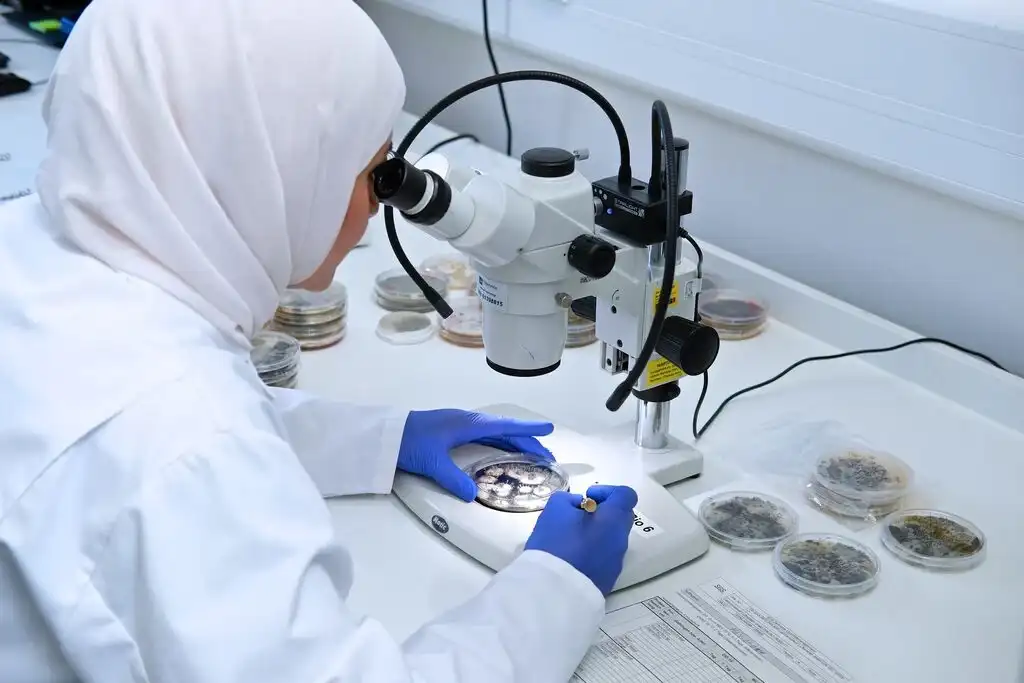
3. Visual & Microscopic Examination
The etched surface is examined using:
- Stereomicroscopy
- Optical microscopy
- Metallographic evaluation techniques
4. Technical Reporting
QMN Consultants provides a detailed inspection report including:
- Inspection procedure
- Observations
- Photographic documentation
- Metallurgical interpretation
- Recommendations (where applicable)
Why Choose QMN Consultants?
✓ Experienced metallurgical professionals
✓ Aerospace and industrial component evaluation expertise
✓ Advanced metallurgical examination capability
✓ Detailed technical reporting
✓ Independent third-party inspection services
Industries Served
- Aerospace
- Automotive
- Defense
- Oil & Gas
- Heavy Equipment
- Manufacturing
- Heat Treatment Facilities